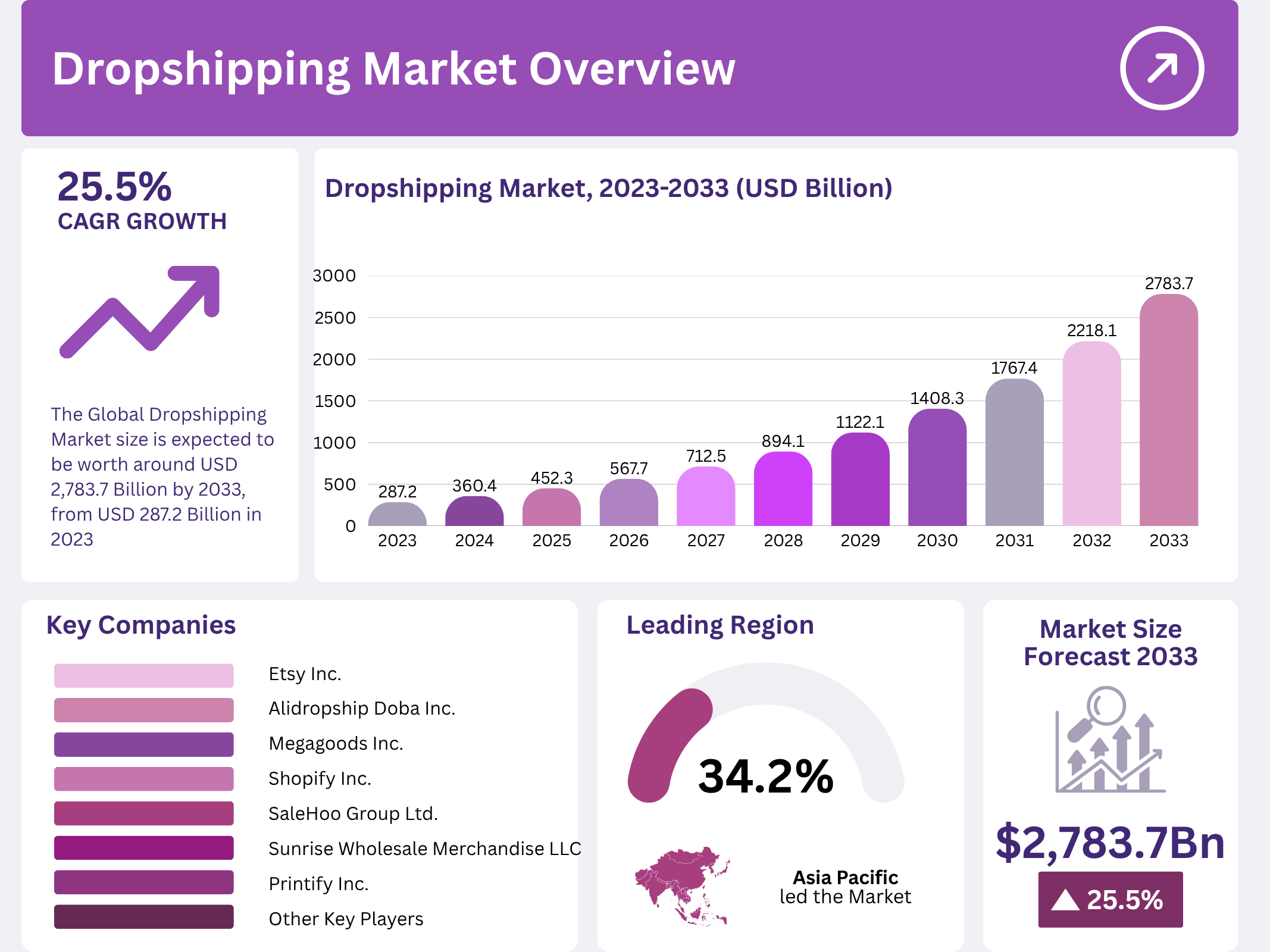
The dropshipping industry continues to redefine online retail. According to Global Market Insights, the global dropshipping market is valued at approximately $290.7 billion in 2025 and is projected to reach $343 billion by 2026, growing at a compound annual growth rate (CAGR) of over 20%. With 27% of online retailers worldwide now using dropshipping as their primary fulfillment method and the model accounting for 23% of all online sales globally, this business model is far from slowing down. But the landscape is evolving rapidly — here's what you need to know to succeed.
Market Overview: The Numbers Behind the Growth
The dropshipping market has matured significantly. It's no longer a niche side hustle — it's a mainstream e-commerce fulfillment strategy adopted by businesses of all sizes. Here are the key figures shaping the industry:
The market is expected to grow at a CAGR of 20.6% from 2026 to 2035, with some analysts projecting it could exceed $1.25 trillion by 2030. Asia Pacific leads the market with 35.2% share, driven by China's manufacturing dominance and rising middle-class spending. The North American market, valued at $48.2 billion in 2025, is expanding at a rate of 23.5% annually. Electronics and Media dominate product categories at 34% market share, followed by Fashion at 23%. Food and personal care is emerging as the fastest-growing segment.
Five Trends Reshaping Dropshipping in 2026
1. AI-Powered Operations Are Now the Standard
Artificial intelligence is no longer a competitive advantage — it's a baseline requirement. By 2026, an estimated 70% of dropshippers will use AI tools for daily operations, from product research and demand forecasting to customer service automation and dynamic pricing. In 2025, 33% of e-commerce sellers had fully integrated AI into their operations, with another 47% experimenting with it for specific tasks. Tools powered by AI can now analyze millions of data points across TikTok, Instagram, Amazon, and AliExpress to predict trending products weeks before they go viral, giving early adopters a significant edge.
2. The Rise of Niche and Brand-Focused Stores
The era of generic "sell everything" stores is over. Successful dropshippers in 2026 are building specialized niche brands that cater to specific customer communities. This shift is driven by consumers who increasingly value authenticity and expertise over low prices. A store dedicated entirely to eco-friendly pet accessories, for example, will outperform a general store selling random products. Brand-focused stores command higher profit margins (30-50% in narrow niches vs. 10-20% for general stores), enjoy stronger customer loyalty, and face less direct competition from marketplace giants.

3. Speed Is King: The Push for Faster Delivery
Consumer expectations around delivery speed continue to tighten. Research shows that sub-5-day delivery significantly boosts conversion rates and reduces cart abandonment. To meet this demand, a growing number of dropshippers are adopting hybrid fulfillment models — combining international sourcing with domestic warehousing in target markets like the US, UK, and Europe. This approach allows businesses to offer competitive delivery speeds without sacrificing the cost benefits of global sourcing. Service providers like ETdropship help bridge this gap by offering warehousing solutions, quality inspection, and consolidated shipping to major markets worldwide.
4. Sustainability as a Business Strategy
Sustainability is no longer just a buzzword — it's becoming a key purchase driver. A growing segment of consumers actively seeks out brands that use eco-friendly packaging, practice ethical sourcing, and offer carbon-neutral shipping options. Forward-thinking dropshippers are responding by partnering with suppliers who prioritize sustainable manufacturing, choosing recyclable packaging materials, and being transparent about their supply chain practices. This isn't just good ethics — it's good business. Stores that highlight their sustainability efforts consistently report higher customer trust and repeat purchase rates.
5. Social Commerce Is Exploding
TikTok Shop, Instagram Shopping, and Facebook Marketplace are transforming how consumers discover and buy products. These platforms offer dropshippers low-cost promotion channels with highly targeted reach. Viral product videos on TikTok regularly drive thousands of sales in days — sometimes hours. The Facebook Ad Library remains one of the best free tools for competitive research, allowing sellers to see exactly which products are being advertised, for how long, and with what creative angles. Smart dropshippers are now using these platforms not just for advertising, but as primary sales channels.
Strategies for Building a Profitable Dropshipping Business
Understanding trends is important, but execution matters more. Here are proven strategies that successful dropshippers are using in 2026:
First, validate before you invest. Use tools like Google Trends, the AliExpress Dropshipping Center, and Amazon Best Sellers to confirm genuine demand before committing to any product. Run small ad campaigns ($20/day for 7 days) to test market response before scaling.
Second, focus on problem-solving products. The most successful dropshipping products solve a real problem or provide a genuine "wow" factor. Products that improve daily life have higher perceived value and generate more word-of-mouth referrals.
Third, build a real brand. Invest in professional branding — a quality logo, consistent design language, custom packaging, and a compelling brand story. This differentiates you from the thousands of faceless stores and builds long-term customer loyalty.
Fourth, prioritize customer experience. Fast response times, clear shipping expectations, hassle-free returns, and proactive communication transform one-time buyers into repeat customers. Remember that acquiring a new customer costs 5-7x more than retaining an existing one.
Fifth, work with reliable service providers. Your supply chain is only as strong as your weakest link. Partner with service providers who offer quality inspection, reliable shipping, and responsive communication. This single decision can make or break your business.
The Bottom Line
The dropshipping industry in 2026 is bigger, more sophisticated, and more competitive than ever. But with a projected market value of $343 billion and continued double-digit growth, the opportunity is immense. Success no longer comes from finding a single viral product and riding the wave. It comes from building a systematic, brand-focused operation powered by data, supported by reliable partners, and driven by genuine value for customers.
Whether you're just starting out or looking to scale an existing operation, the fundamentals remain the same: choose the right niche, partner with reliable suppliers, deliver quality products fast, and always put your customers first.